CASES announces winner of Climate Action and Sustainability Award
23rd March 2026
The Chartered Association of Sport and Exercise Sciences (CASES) is delighted to announce Sue Pinner, Senior Lecturer in Sport and Exercise Physiology at Manchester Metropolitan University as the winner of the 2025 Climate Action and Sustainability in Sport and Exercise Science Award in the Pedagogy category.
Sue, who also serves as STEM Education Hub Lead for Sustainable Development (ESD) at Man Met, was recognised for her outstanding, research‑informed leadership in embedding sustainability across sport and exercise science education.
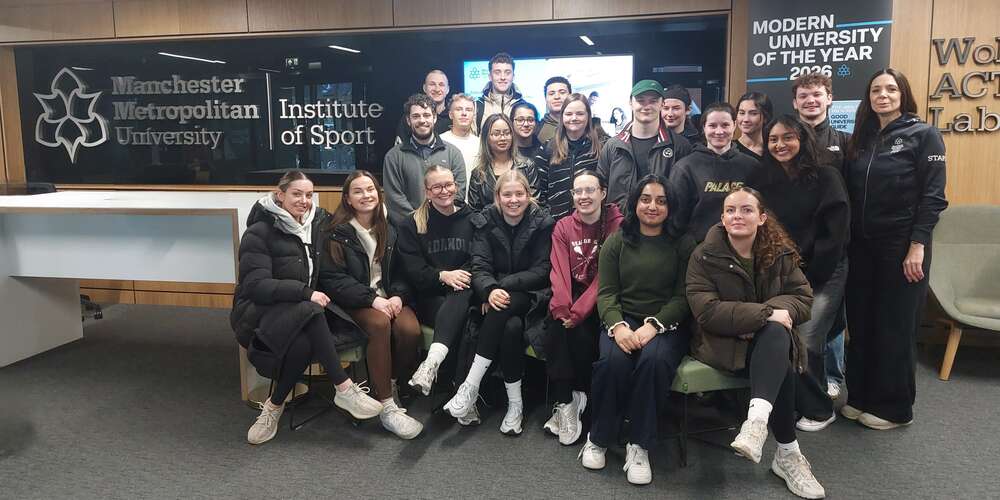
Sue (pictured above with some of the MSc Clinical Exercise Physiology students) said,
“I’m delighted to have been awarded first place for Pedagogy in the Climate Action and Sustainability in Sport and Exercise Science Awards. By developing climate‑literate sport and exercise science graduates, my work supports the sustainability transition of a significant workforce of the sporting sector in our local region. Greater Manchester employs over 14,900 people and contributes approximately £2.1 billion to the regional economy, and this initiative aligns with Greater Manchester’s 2038 carbon‑neutral target.
“This recognition from CASES exemplifies the reputation for sustainability that Manchester Met has built and adds to previous recognition as the UK’s most sustainable university in the People & Planet University League for 2025–26.”
Professor Liz Price MBE, Deputy Pro‑Vice‑Chancellor Sustainability said,
“Sue’s award is richly deserved. Her leadership exemplifies our approach at Manchester Met, where sustainability is a shared priority across our university. Sue’s brilliant initiative clearly demonstrates the value that sustainability adds to our academic mission.”
Sue has developed and implemented a scalable, department‑wide sustainability model that positions climate literacy as a core professional competency for all sport and exercise science students. The work aligns with Man Met’s commitment to embedding ESD across all programmes by 2027 and supports Greater Manchester’s ambition to reach carbon neutrality by 2038.
Grounded in sustainability education research, environmental physiology, and behaviour change science, the initiative uses the United Nations Sustainable Development Goals, particularly SDG 13: Climate Action, to frame learning around how sport, physical activity, and health systems are affected by and contribute to climate change.
Innovation Through Carbon Literacy
A key feature of the submission is the large‑scale integration of accredited Carbon Literacy training, delivered in partnership with The Carbon Literacy Project. Over the past three years, every Level 4 student (on a sport and exercise science related course) has completed the training making it one of the largest discipline‑specific rollouts in the UK.
Rachel Dunk Professor of Climate and Carbon Management Education said, “Seeing Sue recognised is truly inspiring. Her work shows why climate education matters—giving future professionals the skills to drive real change. At Manchester Met, we embed sustainability across our teaching because climate‑literate graduates are essential to a fairer, greener future. Sue’s achievement demonstrates the impact of passionate, purposeful leadership, and I’m proud to see it honoured nationally.”
Chair of the Climate Action and Sustainability Advisory Group, Dr Ash Willmott MCASES said, “This inspiring sustainability initiative has demonstrated exceptional impact and leadership in sport and exercise science education, making it a pleasure to see Sue recognised with this award for her outstanding contribution to climate action and sustainability for pedagogy.”
The Outstanding commitment and contribution to Climate Action and the promotion of Sustainability in Sport and Exercise Science Awards were launched in 2025 by the newly established Climate Action and Sustainability Advisory Group. These awards aim to recognise the fantastic work aligned to Climate Action and Sustainability in Sport and Exercise Sciences across CASES’ members, registered laboratories and accredited universities.